

Corn Prices Keep Falling
Corn prices are taking a beating this summer. Futures keep hitting life-of-contract lows. The grain markets are telling a story that many folks in farm country don't want to hear. That story is that this might be the largest corn harvest ever.
Three things are working against corn prices right now. To start with, the crop conditions across the Midwest growing regions are close to perfect. Second, technical trading trends are suggesting prices could fall even further. Third and finally, some smart traders are finding ways to make money on the price differences between now and later in the year.
Harvest Could Bust the Market
What is behind these optimistic harvest forecasts? Mother Nature has been cooperating. Across the major corn-growing states, nearly three-quarters of the crop is rated in good to excellent condition. This is the best rating at this point in the year since 2018.¹
The near-term weather forecast continues to look strong for corn development. The weather in the corn belt is predicted to be scattered rainfall and moderate temperatures during these critical summer months when corn is usually vulnerable to temperature shock from extreme heat.
This potential bumper crop of corn is a major factor in driving prices down. It’s a simple supply and demand equation. When there's more grain than needed, the price falls. Farmers that need those higher prices to offset their rising input costs from various factors are finding themselves in a tough spot.
Technical Charts Paint a Grim Picture
If you look at the price charts for corn futures, the picture isn't pretty. December corn contracts have broken through price levels that traders had been watching closely for months. When prices fall below these important support levels, it often triggers more selling as computer-driven trading systems kick in.2
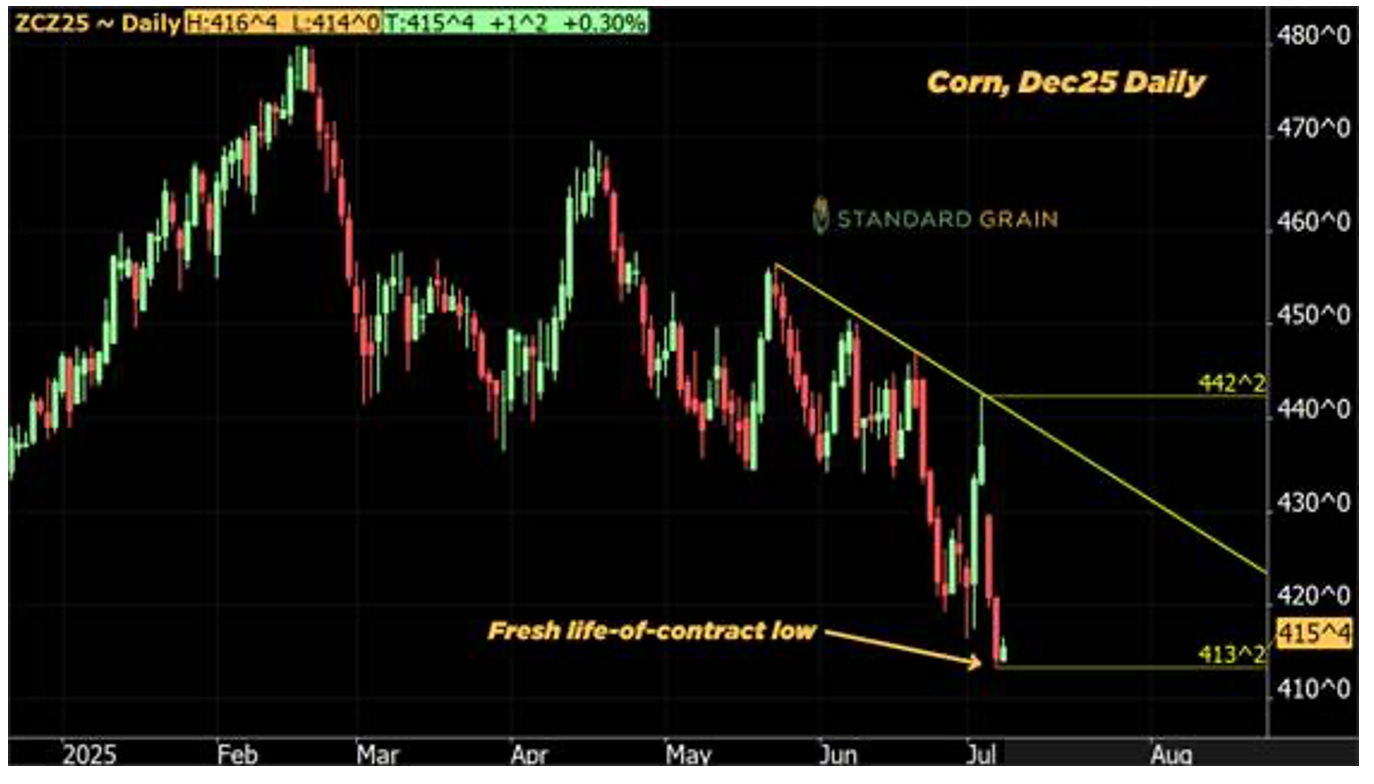
Recent trading sessions have been rough for corn futures. They’ve been dropping sharply throughout all contract months.3 This obviously isn't just random volatility but sustained selling pressure that reflects the market’s genuine concern about oversupply.
The technical breakdown is more than just numbers on a chart. It signals a shift in trader perception. When key support levels are breached, it tends to imply a continuing trend in that direction. This technical weakness adds another layer of concern for farmers still holding on to grain or planning their marketing strategies.
Trading volume patterns support this bearish outlook. Even though the July contract is nearing expiration, there's been plenty of activity, suggesting the selling pressure is real rather than just a function of thin trading.
Smart Money Arbitrage
There's one bright spot for those who understand grain marketing even while outright corn prices are struggling. The price difference between corn delivered now versus corn delivered later in the marketing year has widened considerably.1 This is called a calendar spread.4
Think of a calendar spread like this. Corn delivered in December is trading at a discount to corn for delivery next spring. This is an opportunity for farmers and grain elevator operators with storage space to buy cheaper corn now and sell it later at a higher price. The spreads between different delivery months are unusually wide right now because the market's expecting that harvest pressure will be intense initially but will ease up as the year progresses.
Historically, wide calendar spreads have benefited those positioned to take advantage of them. Elevator operators and farming operations with adequate storage can find these opportunities more attractive than trying to time the more volatile outright market.
Moving Forward
The combination of potential record harvests, technical weakness, and attractive storage economics could mean that corn markets may hit their seasonal lows earlier than usual. Typically, grain prices bottom out during harvest when supply is most abundant, but the current excellent crop conditions and weather could accelerate that.
This early weakness could turn out to be a silver lining for the market. If prices are discounted by the large crop early in the season there could be recovery later in the year when storage constraints assert themselves and the focus moves to next year's planting decisions.
¹ Joe Vaclavik, "Standard Grain Morning Update," email newsletter, July 9, 2025.
² Farm Progress, "Farm Futures Afternoon Market Analysis," July 8, 2025, https://www.farmprogress.com/markets-and-quotes/afternoon-market-recap.
3 Barchart, "Corn Prices and Corn Futures Prices," July 8, 2025, https://www.barchart.com/futures/quotes/ZC*0/futures-prices.
4 Corporate Finance Institute, "Calendar Spread," accessed July 9, 2025, https://corporatefinanceinstitute.com/resources/derivatives/calendar-spread/.
The information provided on this page and its associated documents is intended to provide a broad overview for discussion purposes. It is subject to change and should not be taken as financial or investment advice. Teucrium Trading LLC and Teucrium Investment Advisors, LLC make no offers to sell, solicitations to buy, or recommendations for any security, nor do they offer advisory services.
Past performance is not indicative of future results. Teucrium disclaims any liability for any actions taken based on the information provided herein.