
This month’s WASDE report offered few surprises, confirming that we remain in Stage #1 of the Golden Grain Cycle, where prices are expected to chop sideways around cost-of-production levels. The primary takeaway was a slightly bullish tilt in the corn balance sheet, contrasted by a burdensome domestic wheat supply and a neutral report for soybeans. While global stocks for all three major crops remain adequate on paper, solid corn demand, and a fairly tight domestic bean supply underlies the market’s sensitivity to weather, geopolitical tensions, and international trade dynamics.
Corn
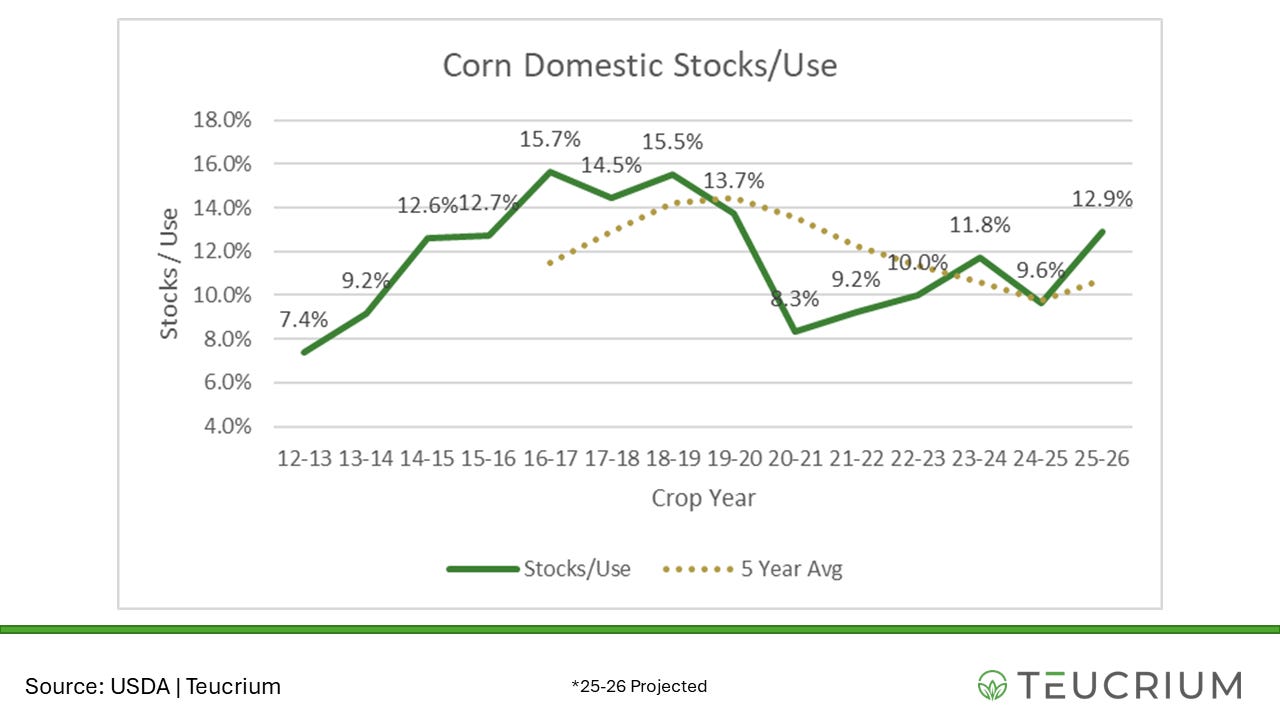
The February WASDE report included a small snack for the bulls. The USDA projected U.S. ending stocks at 2,127 million bushels, a significant 100 million bushel reduction from the previous month and considerably below the analyst average expectation of 2,215 million bushels. This revision was driven by a robust export pace, prompting the USDA to increase its export forecast by 100 million bushels. Accordingly the domestic stocks-to-use ratio tightened to 12.9%, a figure that suggests a much more snug supply situation than previously thought, helping to lift front-month corn futures off their intra-day low.
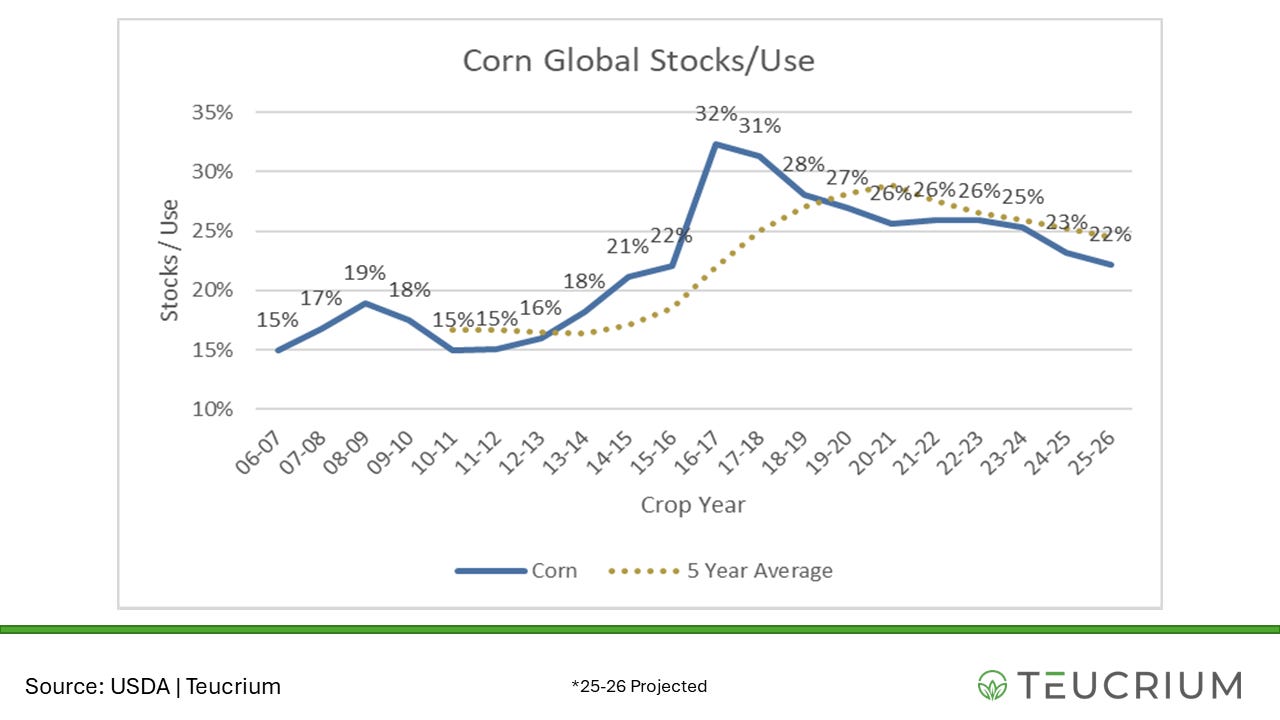
The Report also leaned supportive globally. The USDA pegged World Ending Stocks at 289.0 million metric tons, down 1.9 million from last month and below analyst estimates, drawing the global stocks-to-use ratio down to 22.2%. While this level is historically adequate, it represents a multi-year downtrend, indicating that global consumption is outpacing production. The combination of a tighter U.S. balance sheet and shrinking global inventories provides a stronger support for corn prices heading into the critical U.S. planting season.
Soybeans
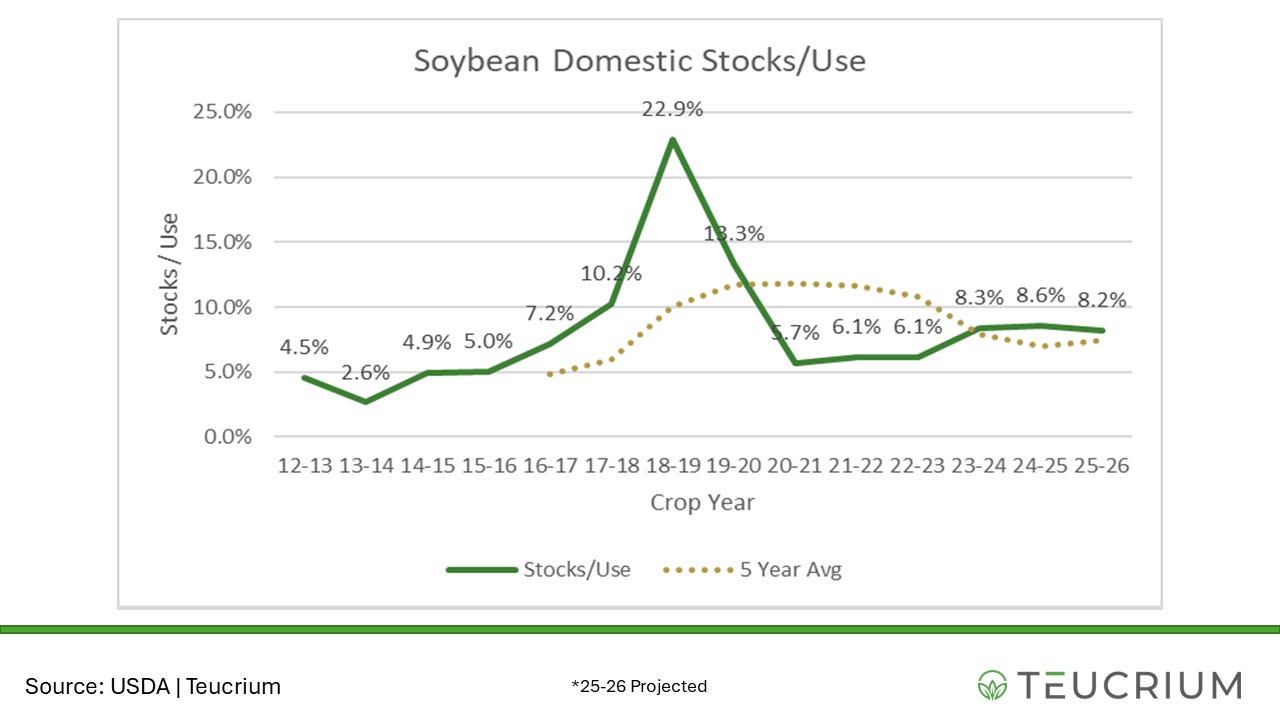
In contrast to corn, the soybean report was a non-event, with projections aligning almost perfectly with market expectations. The U.S. balance sheet was left unchanged from the January report, with ending stocks holding firm at 350 million bushels. This figure was just above the analyst average of 348 million bushels, confirming a stable domestic outlook. The U.S. stocks-to-use ratio remains at a tight 8.2%, but with no fresh inputs, the market’s focus remains on the development of the South American crop and upcoming U.S. planting intentions.
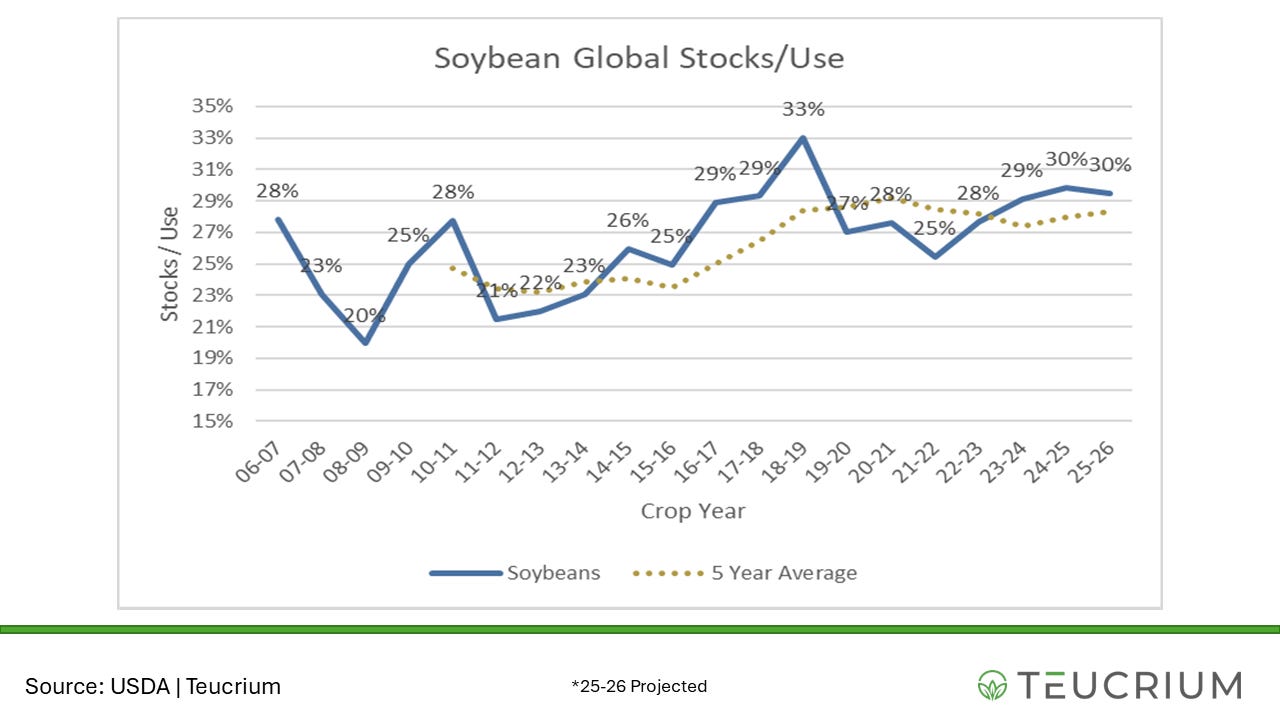
The global soybean outlook was similarly steady. World ending stocks saw a marginal increase to 125.5 million metric tons, primarily due to a 2.0 million ton increase in Brazil’s production forecast thanks to favorable weather. This nudges the global stocks-to-use ratio to 29.5%, which is considered comfortable and is tracking just above the five-year average. With both domestic and global pictures holding steady, the soybean market is left waiting for a new catalyst, likely to come from weather developments in the Southern Hemisphere or planting decisions in the North.
Wheat
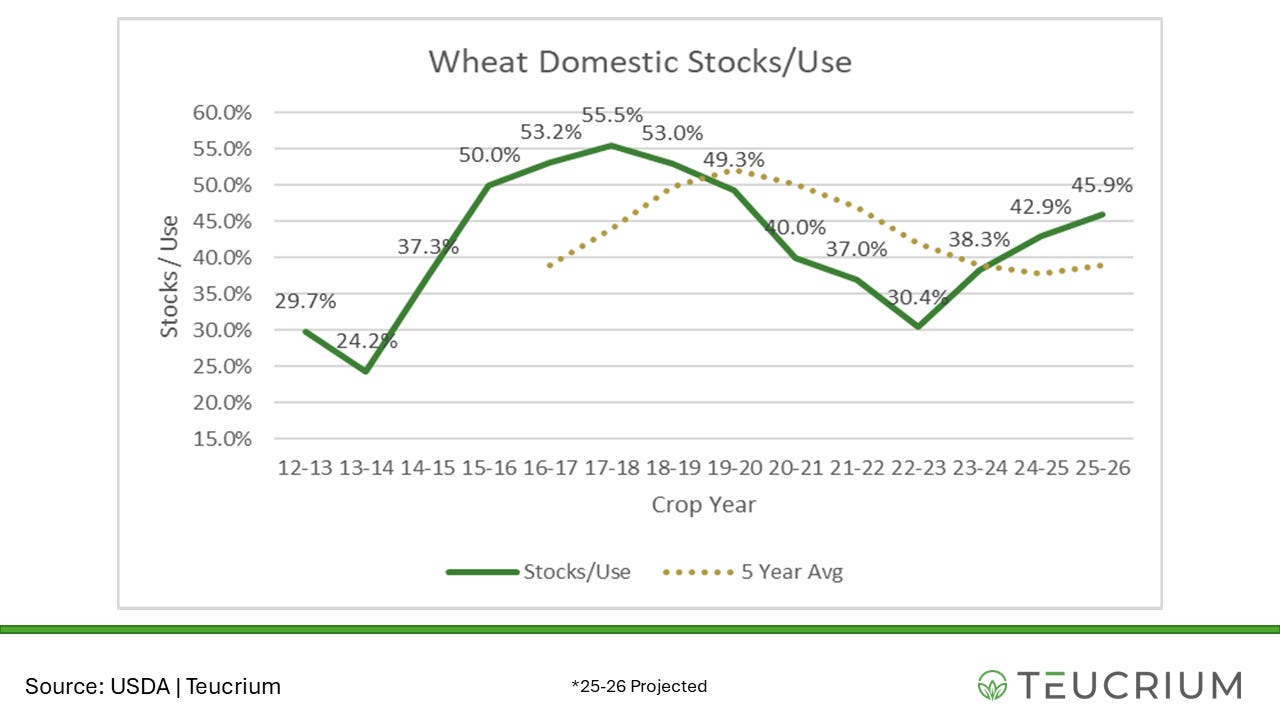
This month’s report solidified the bearish sentiment hanging over the wheat market. Domestic ending stocks were increased to 931 million bushels, coming in above the average analyst estimate and marking the largest U.S. wheat supply since the 2019/20 season. The build resulted from lower domestic food use estimates. The U.S. stocks-to-use ratio increased to a burdensome 45.9%, a six-year high that should continue to act as a significant headwind for domestic prices.
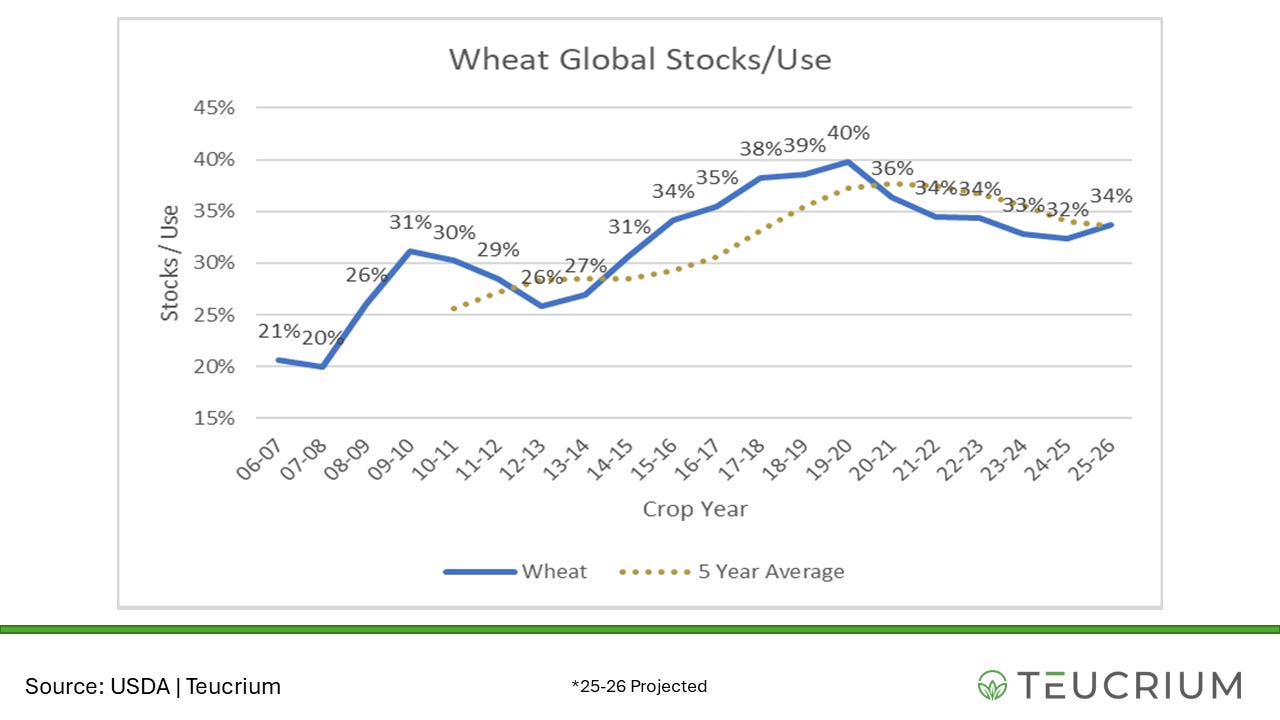
The global balance sheet is less heavy but remains well-supplied. While world ending stocks were trimmed slightly to 277.5 million metric tons, they remain at a five-year high, keeping the global stocks-to-use ratio at an adequate 33.7%. Record production in countries like Argentina is feeding strong global import demand, but it is not enough to meaningfully draw down ample global inventories. The overarching theme for wheat remains one of abundant supplies, which will likely cap any significant price rallies in the near term.